
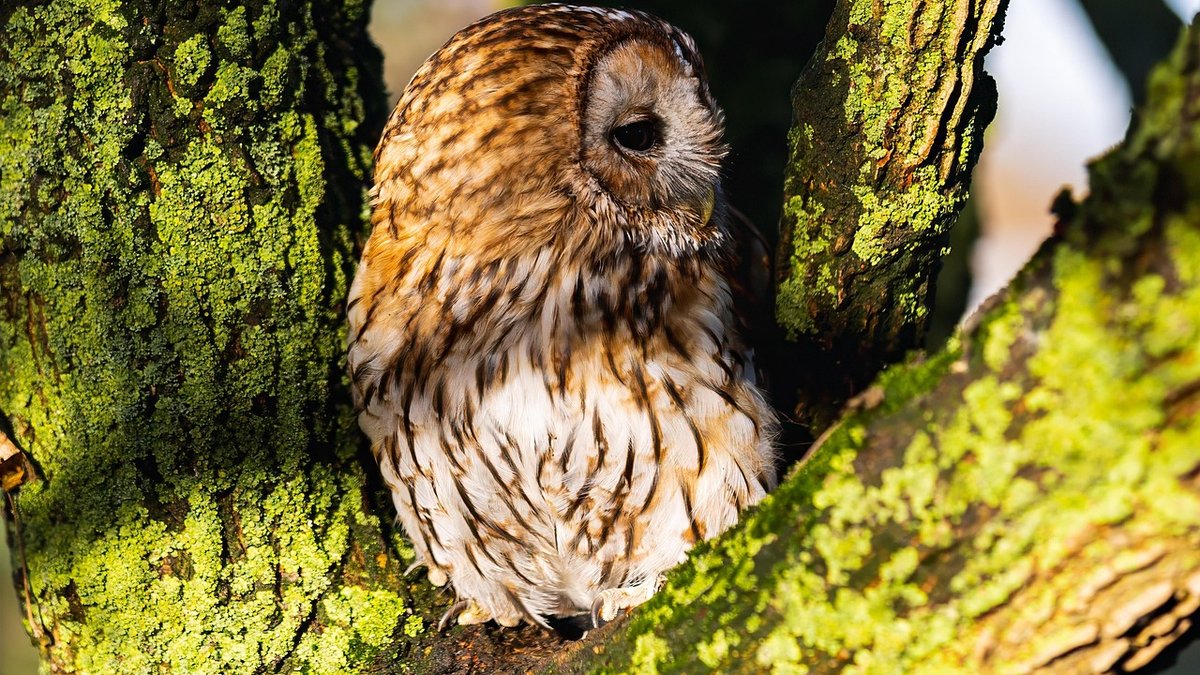
An evening in a British wood rarely delivers perfect sky. Between Atlantic cloud, a moon that ignores your plans and the glow of the nearest town, the odds are stacked against you. That is exactly why a little preparation pays off so handsomely. The key is to work from three variables in order: cloud cover, lunar phase and the shape of the wood itself.
Check the cloud forecast first. Look for a night with broken cloud or better, ideally with a high-pressure ridge settling in and light winds — haze and mist pool in woodland hollows and will blur the faint fuzz of the Andromeda galaxy long before it bothers the brighter stars. A steady barometer and a crisp cold front passage usually give the best transparency of the year.
Then check the Moon. Around new moon you get roughly ten reasonably dark nights a month, with the deepest dark in the four or five nights centred on it. If you only get out once a month, aim for that window. A bright moon will wash out the Milky Way entirely and reduce a rich star field to a few dozen points.
Different targets suit different nights, and planning around them makes the trip feel purposeful rather than hopeful.
Remember the seasonal quirk: from late May to late July, true astronomical darkness never arrives across most of the UK, and north of the Central Belt it stays stubbornly twilight all night. If you want deep sky, save it for autumn and winter.
A star chart printed for the Mediterranean will be wrong for a Scottish glade. Constellations sink or climb depending on how far north you stand, and a planisphere bought for 51°N will leave you guessing at 57°N.
Buy or download a planisphere set for your own latitude band — commonly sold as 51.5°N for southern England and Wales, or 55°N for northern England and Scotland. Many printed charts give a “best for 50–55°N” range, which is fine. If you are printing your own, look for the latitude clearly stated before you commit to a set.
Match the chart to your experience, too. Beginners do best with a planisphere and a simple monthly guide that shows the whole sky. Once you can hop between constellations confidently, add a more detailed chart with magnitude limits around 6.5 — enough to reveal what a dark woodland site can actually show.
Print on A4, punch holes and keep it in a plastic wallet. Damp air in a wood will curl paper within an hour. A red-light head torch and a red acetate sheet over the chart preserve your dark adaptation, which takes twenty minutes to build and seconds to lose to a white phone screen.
Trees are the enemy of stargazing, so scope out your viewing spot in daylight. You want an open glade, a ride, a clearing or the edge of a forestry track running roughly north–south, with a clear view of at least 60 degrees of sky above the horizon.
Walk the site and check these:
The rewards of a woodland night go well beyond the stars. Sit still for twenty minutes with a red torch off and the wood starts to announce itself.
Their presence is a bonus, not a target. Keep voices low, avoid white light and stay on the path. Disturbance costs wildlife energy it cannot easily spare.
Pick a night within three days of new moon, or any clear night if planets are your aim. Check the cloud forecast at teatime and again an hour before you leave. Pack a planisphere set for your latitude, a printed chart in a wallet, a red torch, a flask, and a warm layer — woodland clearings drop fast once the sun is down. Arrive in twilight, find your glade, set up facing the darkest direction, and let your eyes adapt properly. Even a modest session under a partly cloudy British sky will show you more than you expect.

Hi, my name is Anthony kuber. I am artist and fashion designer.
I love to travel and writing blogging.
Your email address will not be published. Required fields are marked *
Software Developer & Writer
Hey, I'm Diva, a developer and writer blending code and creativity. I'm driven by a deep curiosity and a relentless pursuit of excellence. Join me as I craft digital solutions and captivating stories.


