
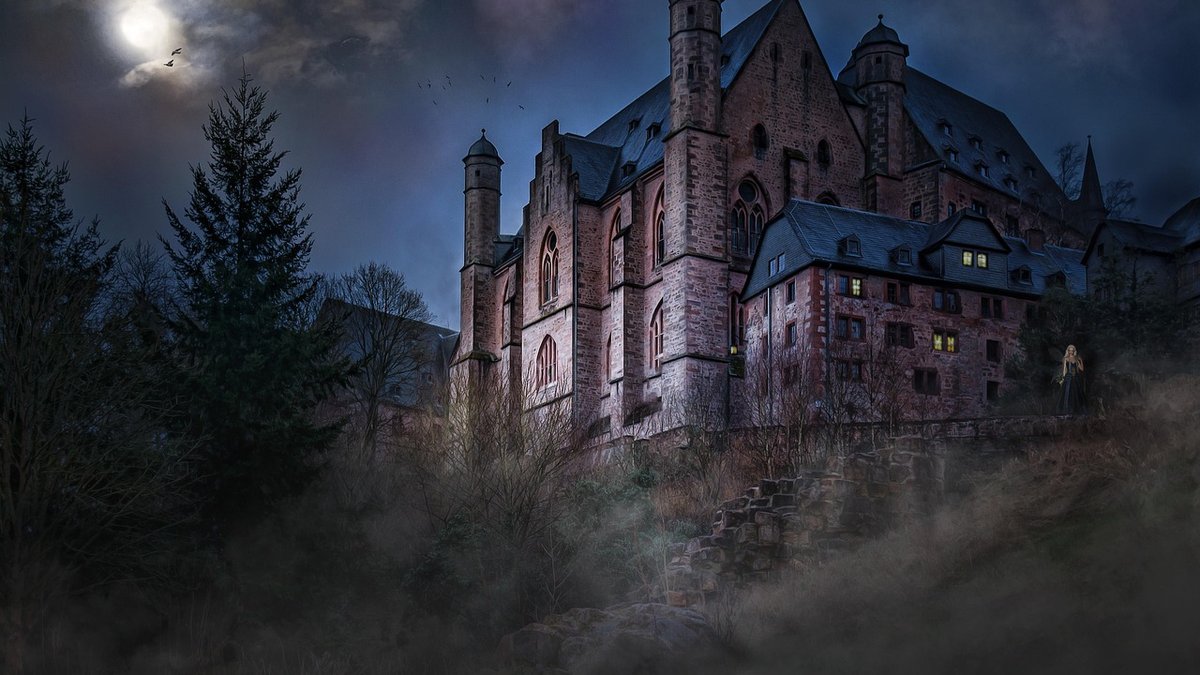
There is a particular pleasure in standing in an ancient wood after dark, when the last dog walkers have gone and the canopy has become a frame rather than a ceiling. You will not get the panoramic skies of a moor or a headland, but what you lose in width you gain in intimacy: a constellation glimpsed through a gap between two oaks feels like a discovery rather than a view.
Broadleaf woodland gives you a moving window on the sky. From late spring to early autumn the canopy closes and the heavens shrink to a scatter of glades, rides and gaps above ponds and tracks. Once the leaves fall, from November through to April, the same wood opens up and you can trace whole constellations above the bare crowns of beech, ash and oak.
Plan around that rhythm. The richest months for woodland stargazing are usually October to March, when the air is often clearer and the nights are long enough for your eyes to settle properly. A wide ride running roughly north to south, or a clearing beside a pond, gives you the best of both worlds: shelter from the wind, a dark horizon and a generous patch of sky.
Pick a night with a clear forecast and, if you can, one close to new moon. A half moon is enough to wash out all but the brightest stars, and the glow from a nearby town will do the same along the horizon. Give yourself twenty to thirty minutes of darkness before you judge the sky at all — your eyes need that long to reach any useful level of sensitivity, and a single glance at a phone screen will set you back again.
Arrive in daylight if the wood is new to you, so you know where the paths, roots and ditches are before the dark changes everything.
You only need a handful of patterns to navigate the whole sky, and each of them can be picked out through a modest gap in the canopy.
Three or four of these are enough to orientate yourself for the rest of your stargazing life.
Rather than sweeping your eyes across the sky, work from one fixed point to the next. Choose the brightest star in your patch of visible sky, hold it steady, then step outward in logical jumps. Your clenched fist held at arm's length covers roughly ten degrees of sky — a useful ruler when a chart tells you a target lies "two fists" from a known star.
Once you have found a pattern, resist the urge to stare directly at the faintest stars. Faint light falls on the edge of your vision more effectively than the centre, so let your gaze drift slightly to one side and the star will appear. This is called averted vision, and it is the single most useful trick in low-light observing. Patience beats equipment every time.
The waiting is rarely dull. Bats begin to appear in the last of the dusk light, pipistrelles flicking along ride edges and Daubenton's skimming low over open water. A simple heterodyne bat detector will tell you which is which.
Keep your voice low, avoid walking off-path and never shine a white light into the trees. The wood is their living room, not our stage.
A printed star chart or a planisphere is ideal in a wood, because it has no screen glare and works in the cold. Take a pencil and note the date, time and what you spotted. Sketching a single constellation — even badly — fixes it in your memory far better than a photograph.
Then go back to the same clearing a month later. The stars you learned will have shifted westward, rising a little earlier each night as the year turns, and the wood around them will have changed too. That slow double movement, sky and woodland together, is what makes a local patch of ancient trees such a rewarding place to learn the night.

Hi, my name is Anthony kuber. I am artist and fashion designer.
I love to travel and writing blogging.
Your email address will not be published. Required fields are marked *
Software Developer & Writer
Hey, I'm Diva, a developer and writer blending code and creativity. I'm driven by a deep curiosity and a relentless pursuit of excellence. Join me as I craft digital solutions and captivating stories.


