
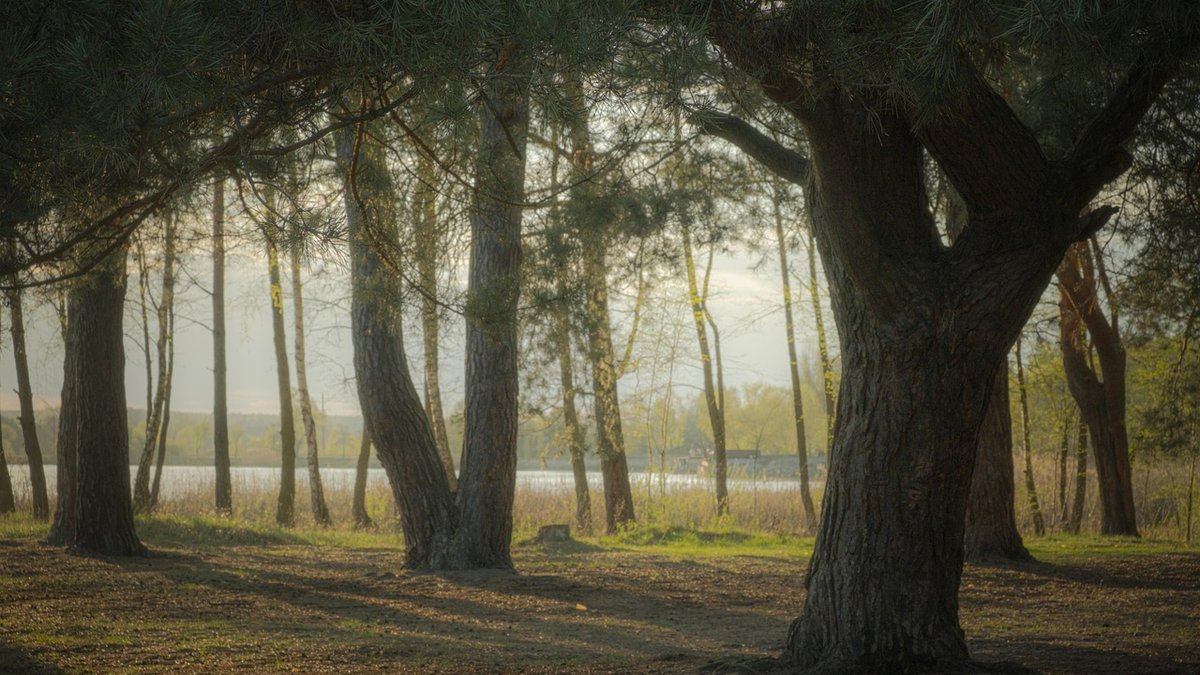
Stepping into woodland after dark is a different kind of walk. Your eyes need twenty to thirty minutes to adapt fully, and a single white beam undoes that in a second. Red light — deep red around 620 to 660 nanometres in particular — barely touches the rod cells responsible for night vision, so you keep your dark-adapted eyes while still seeing the path.
Wildlife benefits too. Bats, badgers, deer, owls and hedgehogs all react less to red than to white, and red attracts far fewer moths and midges, so you are not walking inside a cloud of insects. It is not invisible to animals — nothing is — but it reads as far dimmer and far less alarming.
The beam is where most buying decisions go wrong. A tight spotlight is wonderful for picking out eyeshine across a clearing but useless for spotting roots and puddles at your feet. A very wide flood is lovely around a camp but throws almost no distance.
For woodland tracks you want something adjustable: roughly 30 to 60 degrees, lighting the ground three or four metres ahead without a hard hotspot in the middle.
Angle the head down so the light pools on the path rather than sweeping the canopy, where roosting birds and bats may be.
Red LEDs sip power, so a modest cell lasts a long while — but quoted run times almost always refer to the lowest setting, so read the small print. In practice, look for eight to fifteen hours at a brightness you would actually use.
Rechargeable lithium cells with USB-C are convenient and hold up well in cold weather. Alkaline AAs are cheap and replaceable but fade quickly when the temperature drops, and nickel-metal hydride rechargeables sit somewhere in between. Whichever you choose, carry a spare sealed in a dry bag through winter, and keep the torch in an inside pocket until you need it.
A mechanical lockout — a twist of the tail cap, or a button sequence — stops the torch quietly draining itself in your rucksack.
You will wear it for hours, often over a hat or hood. A head torch under about 100g including battery stays comfortable; much over 150g and you will notice it on every climb. A padded band with a silicone grip strip stops the whole thing sliding up a beanie.
Controls matter more than most people expect. One large rubberised button beats three fiddly ones, especially in gloves. Look for mode memory that starts on low red rather than a blast of white, a genuinely red-only mode, and a lockout. A white light with a red filter over it is a compromise — a dedicated red emitter is cleaner and far more efficient.
If you dislike head torches, a small right-angle light clipped to a strap or a chest-mounted light works well and keeps the beam lower, closer to the ground.
Red output is quoted in lumens, but red always looks dimmer than the same figure in white, so do not chase big numbers. Five to twenty lumens of red is plenty for a woodland path; fifty or more is only for picking out eyeshine at distance. Overdo it and you lose your night vision anyway, red or not.
Technique does as much work as the torch itself. Keep the beam low and ahead, avoid sweeping it through the canopy, and never shine directly at an animal's face — use the edge of the beam instead. If you must use white light to read a map or check a tricky stile, cup it in your hand and keep it brief.
Get those right and you will walk more quietly, see more, disturb less, and come home with your night vision — and your sense of wonder — intact.

Hi, my name is Anthony kuber. I am artist and fashion designer.
I love to travel and writing blogging.
Your email address will not be published. Required fields are marked *
Software Developer & Writer
Hey, I'm Diva, a developer and writer blending code and creativity. I'm driven by a deep curiosity and a relentless pursuit of excellence. Join me as I craft digital solutions and captivating stories.


